Social Centrism
Centrist branch that accepts the market economy but prioritizes social protection, public services, gradual reforms, and institutional consensus to reduce inequality without political rupture or permanent polarization.
Home / Ideologies / Social Centrism
Centrist branch that accepts the market economy but prioritizes social protection, public services, gradual reforms, and institutional consensus to reduce inequality without political rupture or permanent polarization.
EDITORIAL SUMMARY
I want a market balanced by strong social protection, with gradual reforms and institutional consensus reducing inequality.
Sources below support the specific identity or context claims indicated. They do not validate this profile’s twelve numerical coordinates, its closest matches, or every statement in its description.
A documented source review is still pending for this entry. Treat its description and coordinates as an atlas interpretation.
How to interpret catalog profilesPolitical Axes
These coordinates are editorial interpretations. The two pole scores add to 100; they describe a position in this model, rather than a probability. Read how catalog profiles are interpreted ↗
This position is 22.1 points from the median of the 257 ideology profiles in this collection.
This is the largest distance from this collection’s median across the twelve axes. The collection is not a survey of public opinion.
This position is 0.0 points from this collection’s median.
This is the smallest median distance across the twelve axes; it does not establish a historical or political consensus.
Scores below are similarity indices out of 100, calculated from catalog coordinates. They do not establish historical influence or endorsement. How the comparison works ↗
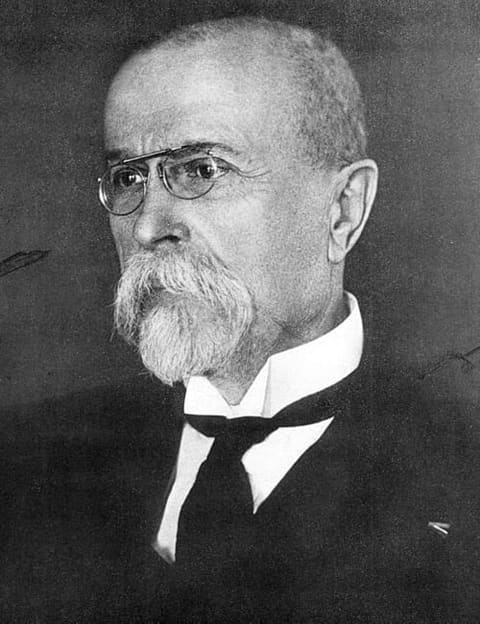
A Czech statesman and philosopher, Masaryk was the founder and first president of Czechoslovakia, defending humanist democracy, minority rights, and ethical values as the basis of national political life.
Closest by facet
Each facet compares three axes: governance (power distribution, representation, civil liberties), culture (integration, religion, social norms), or economy (ownership, coordination, trade). Full-profile similarity compares all twelve.

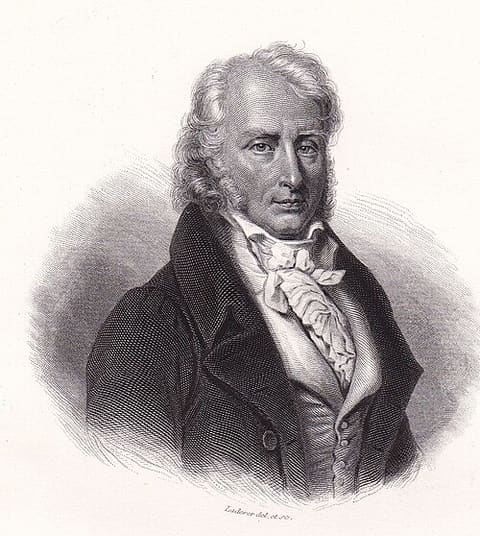
Other nearby figures



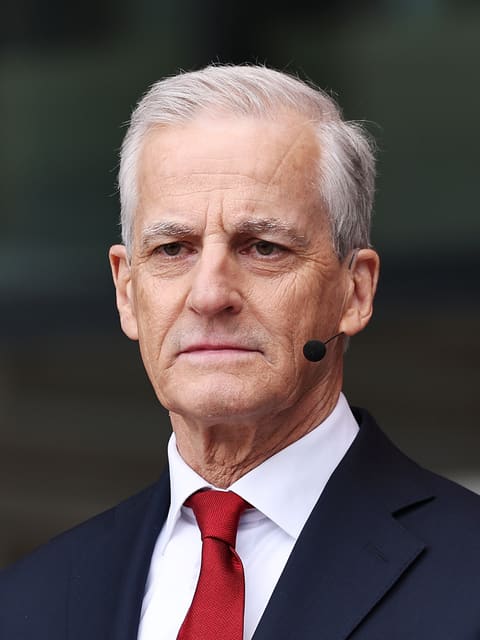




Most distant figures
Scores below are similarity indices out of 100, calculated from catalog coordinates. They do not establish historical influence or endorsement. How the comparison works ↗
Related Doctrines
Scores below are similarity indices out of 100, calculated from catalog coordinates. They do not establish historical influence or endorsement. How the comparison works ↗
Most compatible among the 257 schools
Political position that seeks balance between left and right, valuing moderation, pragmatism, and consensus, and combining elements of different currents to avoid extremes and favor gradual reforms.
Centrist branch that prioritizes sustainability, gradual energy transition, environmental regulation, and technological prudence, seeking to reconcile climate protection, markets, and democratic institutions without anti-capitalist rupture.
Reformist current that reinterprets Islam in light of reason, human rights and pluralism, advocating democracy, gender equality, a non-confessional state and freedom of conscience, in Muhammad Abduh's modernist tradition.
Most distant ideology
Clerical FascismTerceira Posição52.9 / 100