National Democracy
Current that combines popular sovereignty and democratic institutions with strong cultural nationalism, prioritizing the nation's interests and identity over supranational commitments and multiculturalism.
Home / Ideologies / National Democracy
Current that combines popular sovereignty and democratic institutions with strong cultural nationalism, prioritizing the nation's interests and identity over supranational commitments and multiculturalism.
EDITORIAL SUMMARY
I want a sovereign nation that freely votes its own laws, but places the people's identity and interests above any supranational commitment.
Sources below support the specific identity or context claims indicated. They do not validate this profile’s twelve numerical coordinates, its closest matches, or every statement in its description.
A documented source review is still pending for this entry. Treat its description and coordinates as an atlas interpretation.
How to interpret catalog profilesPolitical Axes
These coordinates are editorial interpretations. The two pole scores add to 100; they describe a position in this model, rather than a probability. Read how catalog profiles are interpreted ↗
This position is 22.5 points from the median of the 257 ideology profiles in this collection.
This is the largest distance from this collection’s median across the twelve axes. The collection is not a survey of public opinion.
This position is 0.0 points from this collection’s median.
This is the smallest median distance across the twelve axes; it does not establish a historical or political consensus.
Scores below are similarity indices out of 100, calculated from catalog coordinates. They do not establish historical influence or endorsement. How the comparison works ↗
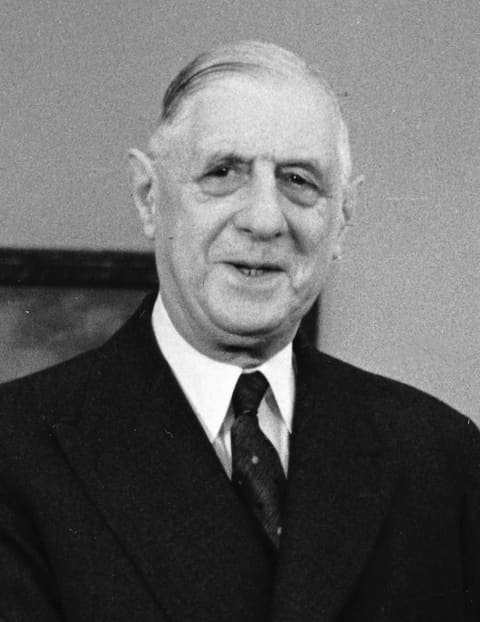
President of France (1959–1969) and leader of the Resistance in World War II, de Gaulle founded the Fifth Republic with a strong presidency, withdrew France from NATO's integrated military command, and built an independent nuclear arsenal to secure strategic autonomy free of subordinate alliances.
Closest by facet
Each facet compares three axes: governance (power distribution, representation, civil liberties), culture (integration, religion, social norms), or economy (ownership, coordination, trade). Full-profile similarity compares all twelve.

Other nearby figures

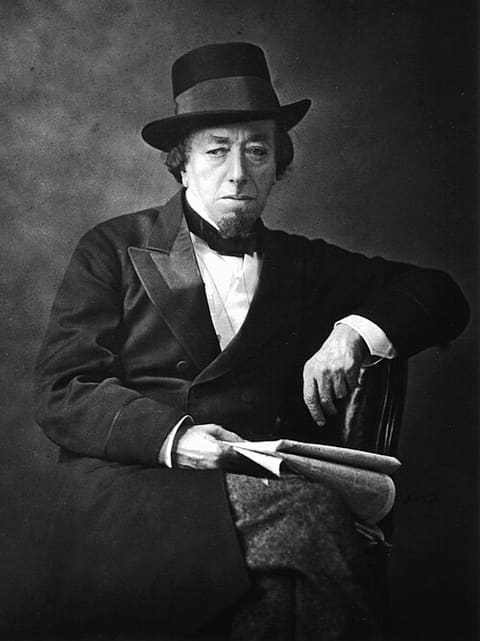
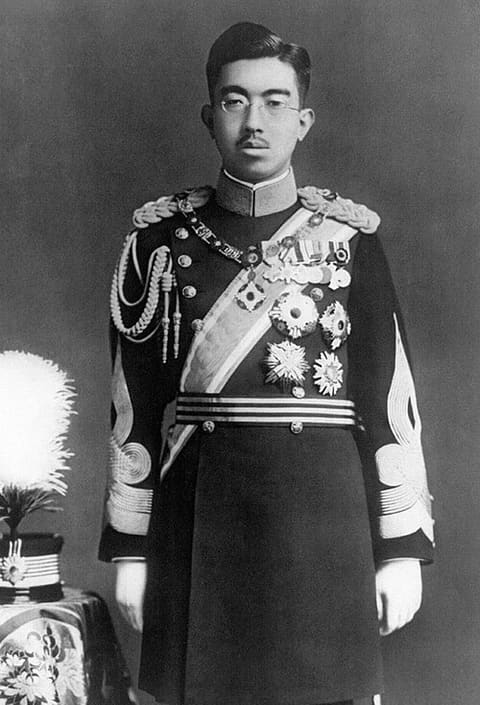
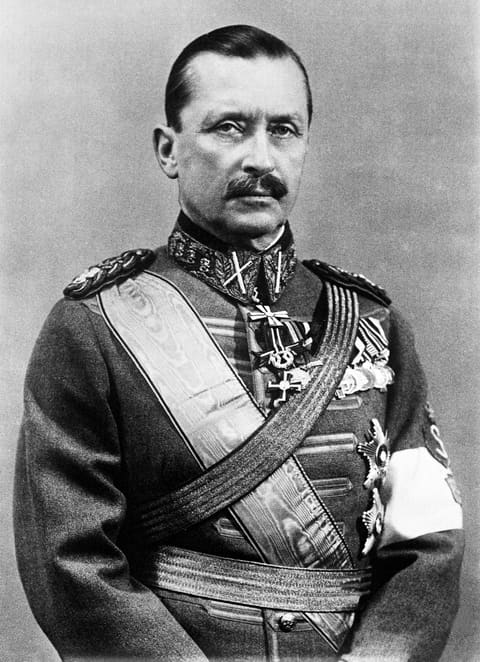

Most distant figures
Scores below are similarity indices out of 100, calculated from catalog coordinates. They do not establish historical influence or endorsement. How the comparison works ↗
Related Doctrines
Scores below are similarity indices out of 100, calculated from catalog coordinates. They do not establish historical influence or endorsement. How the comparison works ↗
Most compatible among the 257 schools
Nationalism based on shared language, traditions, and heritage rather than race, which values the people's cultural identity and the integration of those who adopt these values, defending the nation's cohesion.
Conservative tradition that accepts social reforms and protection for the poorest to preserve national cohesion, seeing elites as responsible for the people's welfare and for harmony between classes.
Justicialist doctrine of Juan and Eva Perón uniting political sovereignty, economic independence and social justice, with CGT unions, nationalizations, protected industrialization, social Catholicism and a charismatic leader above parties.
Most distant ideology
Progressive LibertarianismLibertário48.1 / 100