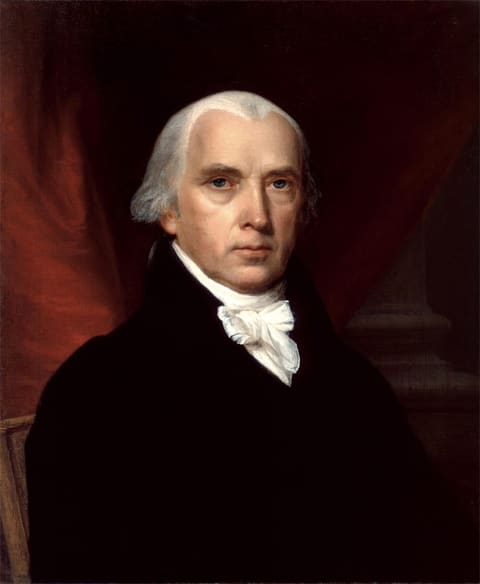
Moral philosopher and political economistEconomics1723–1790
Adam Smith
Scottish moral philosopher and political economist, author of The Theory of Moral Sentiments (1759) and The Wealth of Nations (1776). He explored exchange, the division of labor, moral judgment, justice, and the roles of public finance and institutions.
ASName-only placeholder for Adam Smith. No catalog image is shown.1723–1790Political figure1723–1790Sources & interpretation+
Identity & context
Source checkedReviewed
Description
Source checkedReviewed
Political coordinates
Editorial estimates · not independently verified
Image context
Contextual illustration
Sources below support the specific identity or context claims indicated. They do not validate this profile’s editorial category labels, twelve numerical coordinates, closest matches, or every statement in its description.
Review statuses describe scoped, agent-assisted checks against cited sources. They are not an independent human expert certification.
Professor Chris Berry explains Smith’s moral philosophy, the 1759 Theory of Moral Sentiments, the 1776 Wealth of Nations, division of labor, justice, public finance, and publicly supported elementary education.
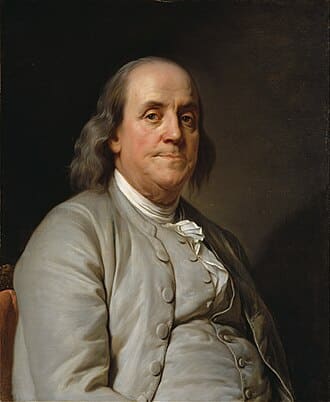
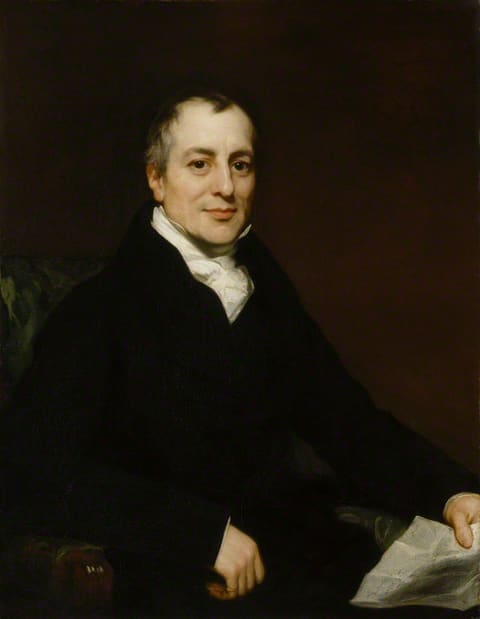
The exact date of Smith’s birth is unknown; the 1723 baptism is documented. His moral and economic writings should be read together. The local image is a painted depiction; its artist, date, likeness, and license remain unverified.
This image is presented as a contextual illustration. Its caption and review notes describe the depiction.
These coordinates are editorial interpretations. The two pole scores add to 100; they describe a position in this model, rather than a probability. Read how catalog profiles are interpreted →
Distribution of power
Leaning · Federal
Federal68.8%
Unitary31.2%
Representation
Near midpoint
Democracy47.5%
Autocracy52.5%
Civil liberties
Leaning · Liberty
Security40%
Liberty60%
Cultural integration
Leaning · Multicultural
Assimilation40%
Multicultural60%
Conflict resolution
Leaning · Negotiation
Military force32.5%
Negotiation67.5%
Foreign involvement
Leaning · Non-Intervention
Non-Intervention66.2%
Interventionist33.8%
Ownership
Leaning · Private
Public31.2%
Private68.8%
Economic coordination
Leaning · Markets
State direction35%
Markets65%
International trade
Strong · Free trade
Protectionism18.8%
Free trade81.2%
Religion & state
Leaning · Secular
Secular60%
Religious40%
Social norms
Leaning · Traditionalist
Progressive40%
Traditionalist60%
Technology & precaution
Leaning · Acceleration
Acceleration67.5%
Ecologist32.5%
What distinguishes Adam Smith
Largest median distance
Distribution of power
This position is 33.3 points from the median of the 449 figure profiles in this collection.
FederalUnitary
Catalog median 36% FederalAdam Smith 69% Federal
This is the largest distance from this collection’s median across the twelve axes. The collection is not a survey of public opinion.
Closest to catalog median
Social norms
This position is 0.0 points from this collection’s median.
ProgressiveTraditionalist
Catalog median 40% ProgressiveAdam Smith 40% Progressive
This is the smallest median distance across the twelve axes; it does not establish a historical or political consensus.
Ideological Alignment
Ideologies
Scores below are similarity indices out of 100, calculated from catalog coordinates. They do not establish historical influence or endorsement. How the comparison works →
Scores below are similarity indices out of 100, calculated from catalog coordinates. They do not establish historical influence or endorsement. How the comparison works →
Scores below are similarity indices out of 100, calculated from catalog coordinates. They do not establish historical influence or endorsement. How the comparison works →
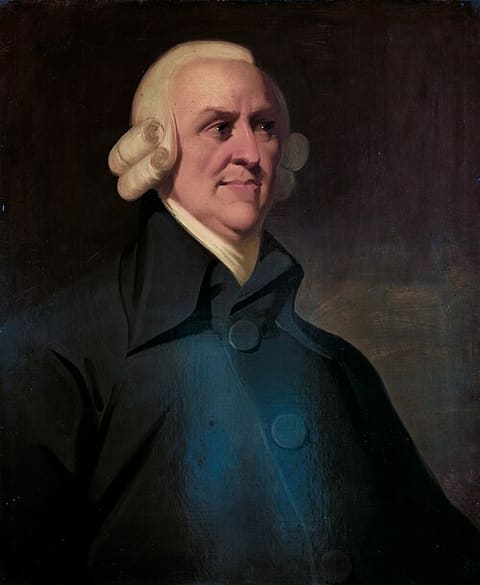 Name-only placeholder for Adam Smith. No catalog image is shown.