Utopian Socialism
Early 19th-century current that envisioned an industrial society reorganized by rational planning, led by scientists, engineers and producers, replacing politicians and aristocrats without appealing to class struggle or revolution.
Ownfacet / Politype / Ideologies / Utopian Socialism
Early 19th-century current that envisioned an industrial society reorganized by rational planning, led by scientists, engineers and producers, replacing politicians and aristocrats without appealing to class struggle or revolution.
EDITORIAL SUMMARY
I want an industrial society run by scientists and producers, rationally planned, superseding politicians and aristocrats without revolution.
Sources below support the specific identity or context claims indicated. They do not validate this profile’s editorial category labels, twelve numerical coordinates, closest matches, or every statement in its description.
Review statuses describe scoped, agent-assisted checks against cited sources. They are not an independent human expert certification.
A documented source review is still pending for this entry. Treat its description and coordinates as an atlas interpretation.
How to interpret catalog profilesPolitical Axes
These coordinates are editorial interpretations. The two pole scores add to 100; they describe a position in this model, rather than a probability. Read how catalog profiles are interpreted ↗
This position is 27.1 points from the median of the 257 ideology profiles in this collection.
This is the largest distance from this collection’s median across the twelve axes. The collection is not a survey of public opinion.
This position is 10.1 points from this collection’s median.
This is the smallest median distance across the twelve axes; it does not establish a historical or political consensus.
Scores below are similarity indices out of 100, calculated from catalog coordinates. They do not establish historical influence or endorsement. How the comparison works ↗
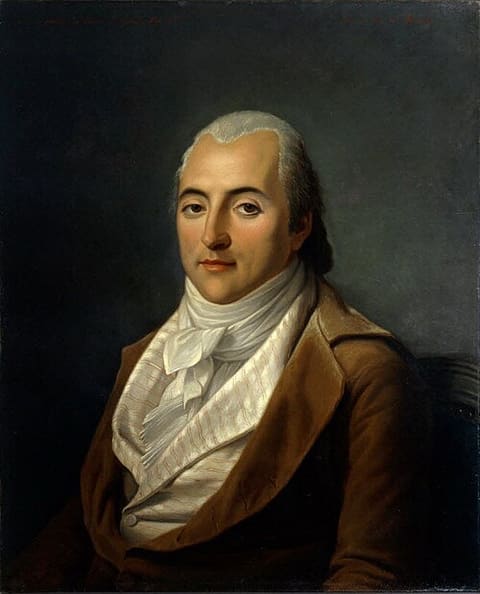
A precursor of technocracy, Saint-Simon proposed an industrial society governed by scientists, engineers, and producers instead of politicians and aristocrats, influencing later socialism and positivism.
Closest by facet
Each facet compares three axes: governance (power distribution, representation, civil liberties), culture (integration, religion, social norms), or economy (ownership, coordination, trade). Full-profile similarity compares all twelve.
Other nearby figures




Most distant figures
Scores below are similarity indices out of 100, calculated from catalog coordinates. They do not establish historical influence or endorsement. How the comparison works ↗
Related Doctrines
Scores below are similarity indices out of 100, calculated from catalog coordinates. They do not establish historical influence or endorsement. How the comparison works ↗
Most compatible among the 257 schools
Model of government in which decisions are made by experts and technical, scientific criteria, entrusting engineers, economists, and scientists with the rational and efficient management of the state and the economy.
Current inspired by Auguste Comte that trusts science and reason to organize society, defending order, progress, and technical administration guided by knowledge in place of metaphysics and tradition.
Model that combines socialist planning with scientific management of the economy, entrusting expert committees, rather than elections or party competition, with the rational organization of production and the egalitarian distribution of society's resources.
Most distant ideology
Confederate ConservatismRight48.5 / 100