Techno-Commercialism
A neoreactionary current that rejects democracy in favor of microstates run like firms. It favors competition among jurisdictions, free markets, the right of exit, and technological innovation as principles of government.
Ownfacet / Politype / Ideologies / Techno-Commercialism
A neoreactionary current that rejects democracy in favor of microstates run like firms. It favors competition among jurisdictions, free markets, the right of exit, and technological innovation as principles of government.
EDITORIAL SUMMARY
I want competing corporate cities run by shareholders, with freedom to exit and markets and technology rewarding efficiency.
Sources below support the specific identity or context claims indicated. They do not validate this profile’s editorial category labels, twelve numerical coordinates, closest matches, or every statement in its description.
Review statuses describe scoped, agent-assisted checks against cited sources. They are not an independent human expert certification.
A documented source review is still pending for this entry. Treat its description and coordinates as an atlas interpretation.
How to interpret catalog profilesPolitical Axes
These coordinates are editorial interpretations. The two pole scores add to 100; they describe a position in this model, rather than a probability. Read how catalog profiles are interpreted ↗
This position is 58.7 points from the median of the 257 ideology profiles in this collection.
This is the largest distance from this collection’s median across the twelve axes. The collection is not a survey of public opinion.
This position is 0.5 points from this collection’s median.
This is the smallest median distance across the twelve axes; it does not establish a historical or political consensus.
Scores below are similarity indices out of 100, calculated from catalog coordinates. They do not establish historical influence or endorsement. How the comparison works ↗
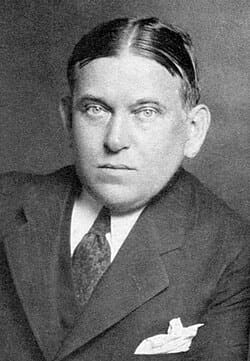
A scathing critic of American democracy, Mencken combined economic libertarianism, Nietzschean elitism, and militant atheism, attacking puritanism, mass culture, and popular faith in newspapers and essays.
Closest by facet
Each facet compares three axes: governance (power distribution, representation, civil liberties), culture (integration, religion, social norms), or economy (ownership, coordination, trade). Full-profile similarity compares all twelve.

Other nearby figures




Most distant figures
Scores below are similarity indices out of 100, calculated from catalog coordinates. They do not establish historical influence or endorsement. How the comparison works ↗
Related Doctrines
Scores below are similarity indices out of 100, calculated from catalog coordinates. They do not establish historical influence or endorsement. How the comparison works ↗
Most compatible among the 257 schools
A world divided into independent city-states and microstates that compete like a market, with free secession, the right of exit and political experimentation, from the medieval free cities to Yarvin's "patchwork" and seasteading.
Current that sees monarchy as a guarantee of freedom and stability, defending a king with limited power who protects property and individual rights and maintains a lean, minimally interventionist state.
Economic system based on private property, free markets, and the pursuit of profit, in which production and prices are regulated by competition and supply and demand, with individual initiative as its engine.
Most distant ideology
Pol Pot SocialismRadical left37.1 / 100