Philosopher and political economistEconomics1818–1883
Karl Marx
Philosopher, political economist, and revolutionary writer whose analysis of capitalism examined class conflict, exploitation, and historical change. His writings influenced socialist and communist traditions, with continuing disagreement about their interpretation and later political applications.
KMName-only placeholder for Karl Marx. No catalog image is shown.1818–1883Political figure1818–1883Sources & interpretation+
Identity & context
CheckedReviewed
Description
CheckedReviewed
Political coordinates
Editorial · review pending
Image context
Identity review pending
Sources below support the specific identity or context claims indicated. They do not validate this profile’s editorial category labels, twelve numerical coordinates, closest matches, or every statement in its description.
Review statuses describe scoped, agent-assisted checks against cited sources. They are not an independent human expert certification.
Karl Marx lived from 1818 to 1883 and developed analyses of historical change, class conflict, and capitalist exploitation. His writings and their later political influence require interpretation, not a uniform account of every communist government.
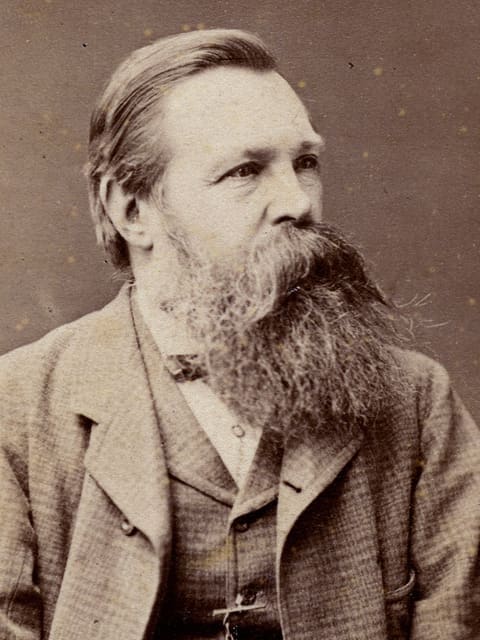
This biography does not equate Marx’s writings with every later socialist movement or communist government. It also does not independently identify the local portrait, establish its license, or justify twelve numerical positions.
These coordinates are editorial interpretations. The two pole scores add to 100; they describe a position in this model, rather than a probability. Read how catalog profiles are interpreted ↗
Distribution of power
Strong · Unitary
Federal23.8%
Unitary76.2%
Representation
Near midpoint
Democracy50%
Autocracy50%
Civil liberties
Leaning · Security
Security67.5%
Liberty32.5%
Cultural integration
Strong · Multicultural
Assimilation17.5%
Multicultural82.5%
Conflict resolution
Leaning · Negotiation
Military force41.2%
Negotiation58.8%
Foreign involvement
Strong · Non-Intervention
Non-Intervention71.2%
Interventionist28.8%
Ownership
Very strong · Public
Public88.8%
Private11.2%
Economic coordination
Strong · State direction
State direction82.5%
Markets17.5%
International trade
Leaning · Free trade
Protectionism38.8%
Free trade61.2%
Religion & state
Very strong · Secular
Secular92.5%
Religious7.5%
Social norms
Strong · Progressive
Progressive72.5%
Traditionalist27.5%
Technology & precaution
Leaning · Acceleration
Acceleration68.8%
Ecologist31.2%
What distinguishes Karl Marx
Largest median distance
Religion & state
This position is 43.7 points from the median of the 449 figure profiles in this collection.
SecularReligious
Catalog median 49% SecularKarl Marx 93% Secular
This is the largest distance from this collection’s median across the twelve axes. The collection is not a survey of public opinion.
Closest to catalog median
Conflict resolution
This position is 5.0 points from this collection’s median.
Military forceNegotiation
Catalog median 46% Military forceKarl Marx 41% Military force
This is the smallest median distance across the twelve axes; it does not establish a historical or political consensus.
Ideological Alignment
Ideologies
Scores below are similarity indices out of 100, calculated from catalog coordinates. They do not establish historical influence or endorsement. How the comparison works ↗
Scores below are similarity indices out of 100, calculated from catalog coordinates. They do not establish historical influence or endorsement. How the comparison works ↗
Scores below are similarity indices out of 100, calculated from catalog coordinates. They do not establish historical influence or endorsement. How the comparison works ↗
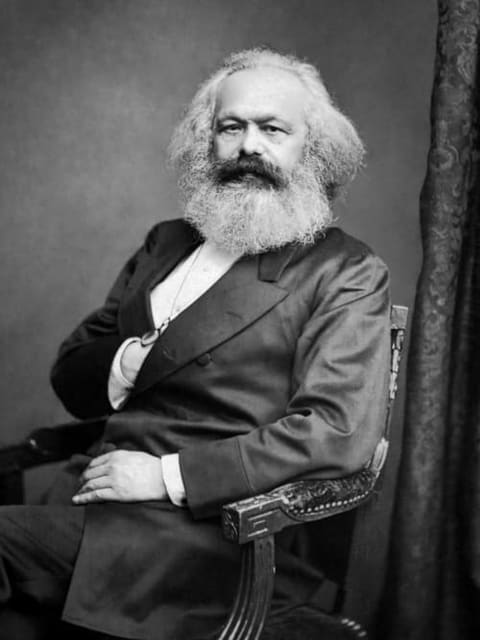 Name-only placeholder for Karl Marx. No catalog image is shown.